

How to find where your condo policy has to start
We Insure Downtown Miami
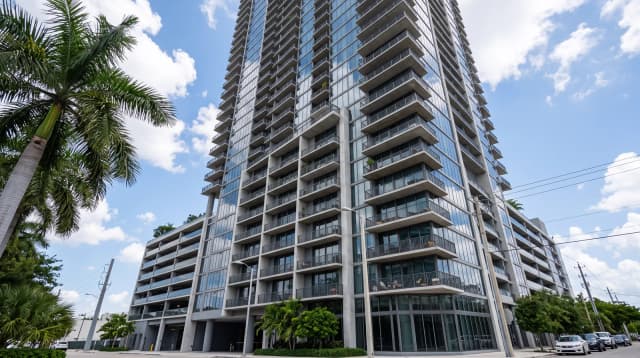
Where the association's policy stops and yours begins is not the same in every building, and it is not a matter of opinion. It is written down, in documents you have a right to see. This is about finding out where your building drew the line — which is a different job from understanding why the line exists at all.
Two questions that get confused
The first is conceptual: how does coverage divide between a condominium association and a unit owner? That question has a general answer, it is the same across buildings, and it is set out on the high-rise and condominiums page alongside home and condo insurance.
The second is specific: where did my building put it, and what does that leave my policy to do? That question has a different answer in every tower on Brickell Avenue, and no page can answer it for you. It is answered by paper.
This post is about the second one.
Florida sets a starting point, your declaration moves it
Section 718.111(11) of the Florida Statutes requires every condominium association to carry adequate property insurance, and it says so "regardless of any requirement in the declaration of condominium for certain coverage by the association." The statute also requires the replacement cost behind that coverage to be determined by an independent appraisal, or an update of one, at least once every 3 years.
So there is a floor, and it does not depend on what your building's documents happen to say. On top of that floor, your declaration allocates responsibilities in language specific to your building.
That is why the honest answer to "what does my association cover?" is always "let us read your declaration" — and why an answer given without reading it is worth what it cost.
The four documents, in the order that makes sense
1. The recorded declaration of condominium. The governing document. It defines the boundaries of a unit and allocates maintenance and insurance responsibility. This is the one that decides; the others describe or implement it.
2. The association's property insurance declarations page. What the association actually bought this year: the carrier, the limits, the deductibles, the effective dates. The declaration says what should be covered; this says what is.
3. The association's certificate of insurance. The summary a manager can usually produce quickly. Useful as a starting point, not as an answer — a certificate is a summary of a policy, not the policy.
4. Your own unit policy declarations page. The last one to read, on purpose. Reading it first is how people end up buying coverage they already have or assuming coverage nobody has.
How to actually get them
This is the part people give up on, and they should not, because the statute is on their side.
Section 718.111(12) makes the declaration, the bylaws and the association's other official records exactly that — official records — and they are open to inspection by any association member. The association must make them available within the county or within 45 miles of the property within 10 working days after receiving a written request.
Three things follow:
- Put it in writing. A verbal request to a manager in the lobby starts no clock. An email does.
- Ask for documents, not summaries. "Please provide the recorded declaration and the association's current property insurance declarations page" is a request. "What does the building cover?" is a conversation.
- Ten working days is not ten days. Two weekends sit inside it. Ask before your renewal, not during it.
What to look for once you have them
You are not trying to become a claims adjuster. You are trying to answer four questions, and then hand the answers to someone who prices policies.
- Where does the unit boundary fall? The declaration will define it. Everything inside is a candidate for your policy; everything outside is a candidate for the association's.
- Who is responsible for the interior surfaces and what is attached to them? Floor, wall and ceiling coverings, cabinetry, fixtures. This is where declarations differ most from one another.
- What is the association's deductible? Because that is the number that can arrive as a common expense.
- What did you change after you bought? Improvements you paid for tend to land on your side of the line, and a policy that predates the work does not know about them. That is its own subject: what a Miami remodel can cost you in insurance.
Why this is worth doing before you shop, not after
A unit policy quoted without the association's documents is quoted on assumptions. Different carriers make different assumptions, which is one reason the same unit gets quoted so differently — and why the smallest number among those quotes is not automatically the one that matches your building.
With the documents in hand, the conversation changes from "what do you want to insure?" to "here is what the association covers, here is what is left, price that." Those produce different policies.
What this post does not answer
This is an article about locating and reading the documents that decide where your policy has to start. It is not a legal reading of your declaration and it is not a coverage determination.
It cannot tell you what your association covers — only your building's documents can, and that is the entire point. It does not explain how the association-unit division works conceptually: that is on the high-rise page. And it does not cover association governance, assessments or disputes with a board, which are matters for an attorney.
Questions we get from unit owners
The manager told me the building covers everything.
Managers are not underwriters, and "everything" is not a coverage term. Ask for the declaration and the association's declarations page. If the building really does cover a great deal, the documents will show it and your policy can be built accordingly.
I bought last month. Do I not already have these?
You may. Closing packages often include the declaration, and rarely include the association's current insurance declarations page — which changes every year anyway.
The association will not give me the documents.
The statute treats them as official records open to member inspection, with a ten-working-day window after a written request. A written, dated request is what turns a preference into an obligation.
My building just changed carriers.
Then the numbers you looked at last year are stale. Deductibles and limits move with the policy, and yours was built against the old ones.
Does any of this change if I rent the unit out?
The use of the unit changes what your own policy needs to do, and sometimes what the association requires of you. Both are worth re-checking rather than assumed.
Where to start
If you own a unit in a Miami building and have never seen the association's current insurance declarations page, that is the document to request this week — in writing.
Get in touch with We Insure Downtown Miami once you have it, and we will read it against your own policy and tell you what is actually left over.