

Condo and home insurance
What your condo policy covers, and what the building's policy does not
A condo in Downtown Miami sits under two separate policies. The association buys the master policy for the building itself; you buy your own for what the master leaves to you. Exactly where that line falls is set by your association's documents rather than by a general rule. Neither policy covers flood.
The association's master policy
Bought by the association, for the building. It covers outward from the line, and where that line falls is written into your declaration.
Your policy
Bought by you, for your unit. It covers inward from that same line, which is why reading the declaration comes before choosing a limit.
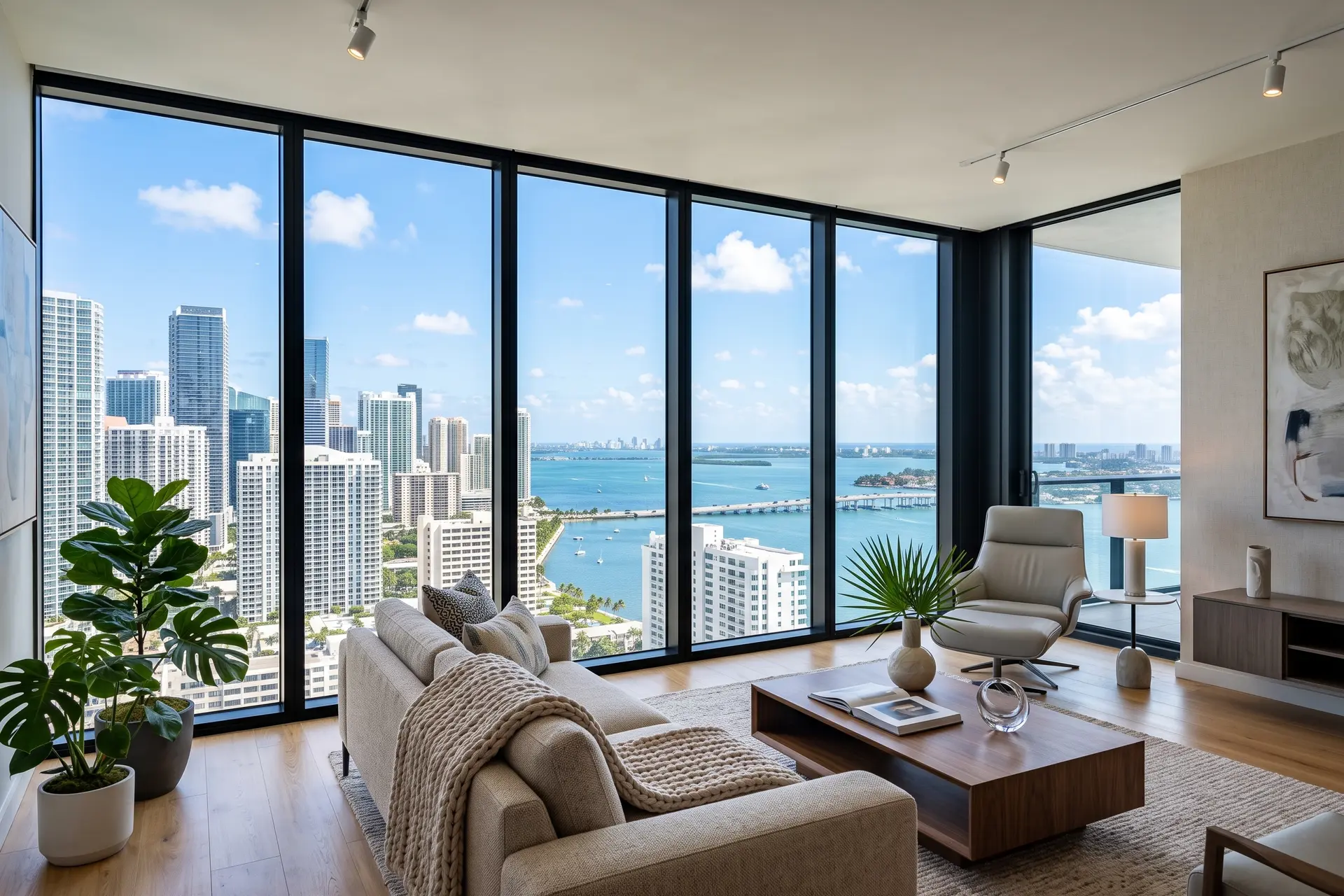
Why a Brickell condo has two policies
Buying a condo means buying a share of a building and the exclusive use of one part of it. Those are two different things to insure, and each has its own policy. The association insures the building on behalf of everyone in it; you insure your unit. Most owners find out there are two policies when something happens near the line between them.
The practical consequence is that a quote means very little until you know where your building draws that line. Two identical units in two towers a block apart can need different policies, because the declarations say different things. What the association's side covers is a subject of its own: see the policy the association carries.
What the unit owner's policy covers
Broadly, five things. How far each one reaches depends on the policy and on where your building's line falls.
The interior of the unit
What is inside your walls and, in most declarations, some part of the walls themselves. Which finishes, fixtures and improvements fall to you rather than to the association is exactly what the declaration decides, in a section most owners have never opened.
Your belongings
Furniture, clothing, electronics and everything else you would take with you. The association's policy never covers these, in any building.
Personal liability
If someone is hurt inside your unit, or something originating in your unit damages a neighbour's, this is the part that responds. It stops at the limit written into the policy.
Loss assessment
If the association is short on a covered loss and charges the difference to owners, this coverage responds to your share. It exists because of how the building's side works, and what triggers it is explained where it belongs: how a shortfall reaches unit owners.
Loss of use
If the unit becomes uninhabitable after a covered loss, this covers the cost of living somewhere else while it is repaired. Limits and duration vary from one policy to the next, and both are printed on your own declarations page.
What you pay before the policy does
A Florida policy carries two different deductibles, and the one that matters most only applies to named storms. Florida Statutes section 627.701 requires the insurer to offer you a hurricane deductible of $500, 2 percent, 5 percent or 10 percent of the dwelling limit on the policy. Above a dwelling limit of $250,000 the insurer is not obliged to offer the $500 option, though nothing stops it from doing so — that is a rule about what must be offered, not about what you are allowed to have.
The percentage applies to your dwelling limit, not to the claim. On a policy with a dwelling limit in the hundreds of thousands, the gap between the 2 percent option and the 10 percent option is larger than what most households keep available. It is worth reading which one your current policy actually carries before a season rather than during one.
Verified against flsenate.gov on 2026-08-25 and cited by section number.
What it does not cover
Three exclusions matter more than the rest, and each one is answered by a different contract.
Flood
Rising water from outside is excluded from every home and condo policy sold in Florida, and needs a separate flood policy. Water that starts inside the building is a different matter and is covered here.
Liability above your policy limit
Personal liability pays up to the limit written into the policy, and no further. What sits above that ceiling is liability above your policy limit, which is its own contract.
Everything on the association's side of the line
The structure, the roof, the common areas and the parts of the building the declaration assigns to the association are not yours to insure. If a claim lands there, it is the master policy that responds, not yours.
The longer explanations are written one at a time, over on the blog.
Houses and condos: what changes
A house has one policy because it has one owner and no shared structure. Everything from the roof down is yours to insure, which makes the contract simpler and the amount larger. A condo splits the same building between two contracts, so the question stops being how much cover you need and becomes where your responsibility starts. Both are placed the same way and by the same broker; what changes is the shape of the answer, not the process.
If you rent the unit out
Renting changes what the policy has to do. You no longer live there, most of what is inside belongs to the tenant, who insures it under a renters policy of their own, and rental income stops if the unit becomes uninhabitable. A policy written for an owner-occupant is not automatically the right one: which one is depends on how you rent it, with a lease or for stays under thirty days.
If you own from outside the United States
Owning here and living elsewhere is common in Brickell and is not a problem. What tends to be different is practical rather than legal: how documents get signed, how a claim gets reported from another time zone, and who can get into the property to assess damage. Those are worth arranging in advance rather than during a claim.
Romina Saaied works with owners in four languages and places coverage for people who are not in Miami most of the year, which is most of Brickell.
Questions from condo owners
- Do I need my own policy if the building already has one?
- Yes. The association's policy is written for the building, not for you, and it never covers your belongings or your personal liability. Most declarations also require owners to carry their own coverage, so it is often an obligation as well as a good idea. The building having a policy is the reason yours can be narrower than a house policy, not a reason to skip it.
- What does the association's master policy leave to me?
- That is the one question with no general answer, and anyone who gives you one without reading your documents is guessing. The split is written into your association's declaration and it genuinely differs between buildings, including between neighbouring towers of the same age. Finding your line is the first step, and it takes one reading of one document.
- Does anything change if I rent my unit out?
- Yes, enough that the policy usually has to change with it. The unit stops being occupied by you, the contents are mostly the tenant's, and there is rental income to think about. Telling your broker the unit is let is not a formality: a claim on a policy written for an owner-occupied unit can be a problem if the unit was let.
- Can I buy a policy if I live outside the United States?
- In general yes, and it is routine in Brickell. Requirements differ by carrier around documentation and how payment is made, and some ask for a local point of contact for claims.
- What is the difference between insuring a house and insuring a condo?
- A house is one building with one owner, so one policy covers all of it. A condo unit is part of a building owned in common, so the cover is split between the association's policy and yours, and the split is defined by a document rather than by a rule. The practical difference is that with a condo you have to know where your building draws the line before the amount of coverage means anything.
Bring your declaration and the renewal you were sent. Reading the two together is the whole exercise, and Romina Saaied does it in English, Spanish, Italian or Portuguese.
Compare your condo coverage
Send what you have today and Romina Saaied will read it against what your building actually requires. You do not need policy numbers to start.